
Across classrooms today, something deeper than academic struggle is unfolding.
Many children are arriving at school carrying invisible weights of anxiety, trauma, social disconnection, and emotional overwhelm. Teachers see it every day: students who cannot concentrate, children who withdraw, and others who express frustration through behaviour.
These are not simply discipline issues or academic gaps.
They are social and emotional realities shaping the learning experience of today’s students.
In a world increasingly shaped by uncertainty, economic pressure, and rapid change, many learners are navigating complex emotional landscapes long before they are equipped to process them. Yet most education systems are still designed primarily to measure what students know, rather than what they feel or experience.
This is where arts education becomes essential.
Classrooms have changed and so have students’ needs. Educators deserve the tools to meet those needs with creativity, empathy, and intention right where the students are, both socially and emotionally.
The Role of Art in Supporting Student Wellbeing
Through our work at Faces Up Uganda, we have seen firsthand how creativity can transform learning environments. When a child paints, draws, performs, or tells a story, something powerful happens:
- Emotions find language
- Confidence begins to grow
- Curiosity reawakens
- Connection with peers becomes easier
Art creates safe entry points into learning.
For some students, drawing a feeling is easier than explaining it.
For others, storytelling unlocks imagination that traditional instruction might suppress.
Creative expression allows learners to process the world around them while building the confidence necessary to engage academically.
This understanding is what led us to develop the Art for Educators Program.
Why the Art for Educators Program Matters Now
The Art for Educators Program was built on a simple but powerful belief:
Teachers are the most important multipliers of change in any education system.
If teachers are equipped with creative tools, those tools reach hundreds of children over time.
Last year, we convened over 40 teachers from under-resourced primary schools in Kampala.
This year, the program is growing significantly.
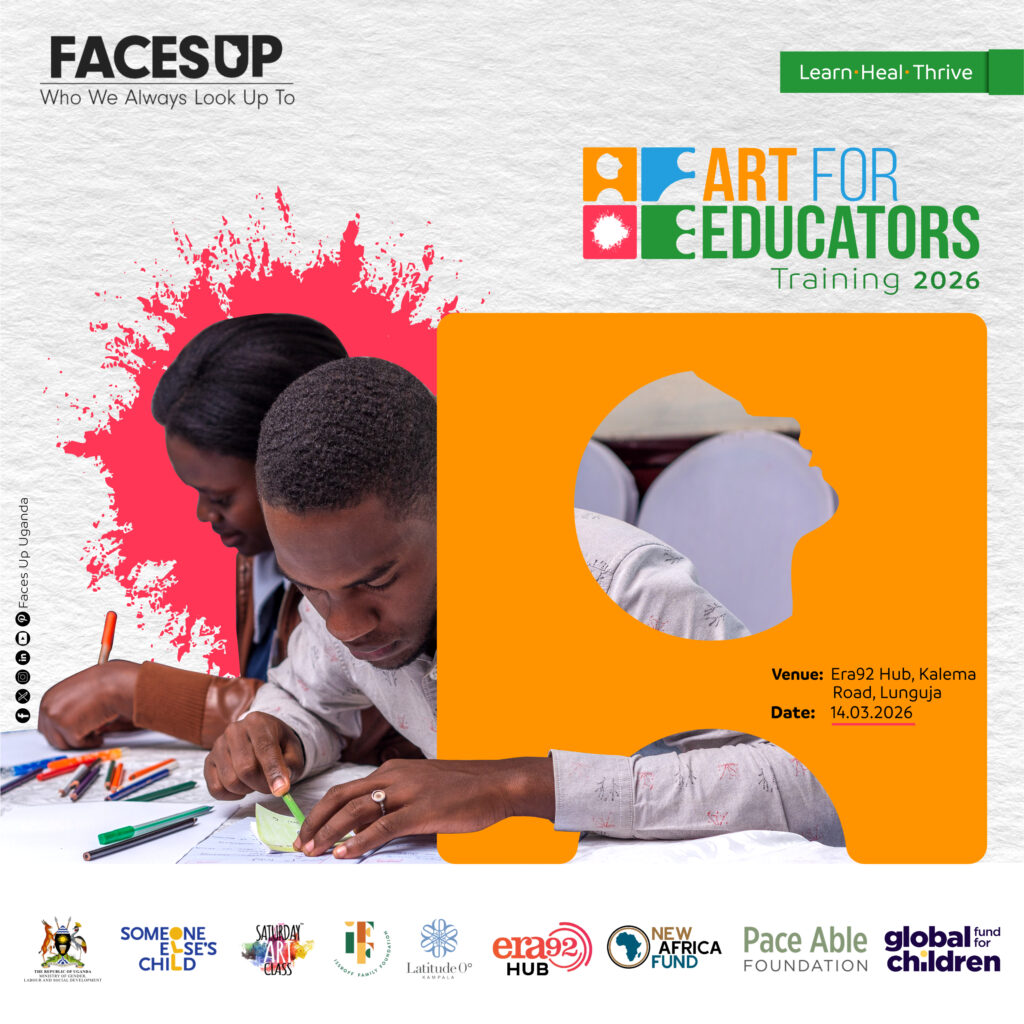
On 14 March 2026, we will bring together more than 120 teachers and school administrators from low-income primary schools across Uganda.
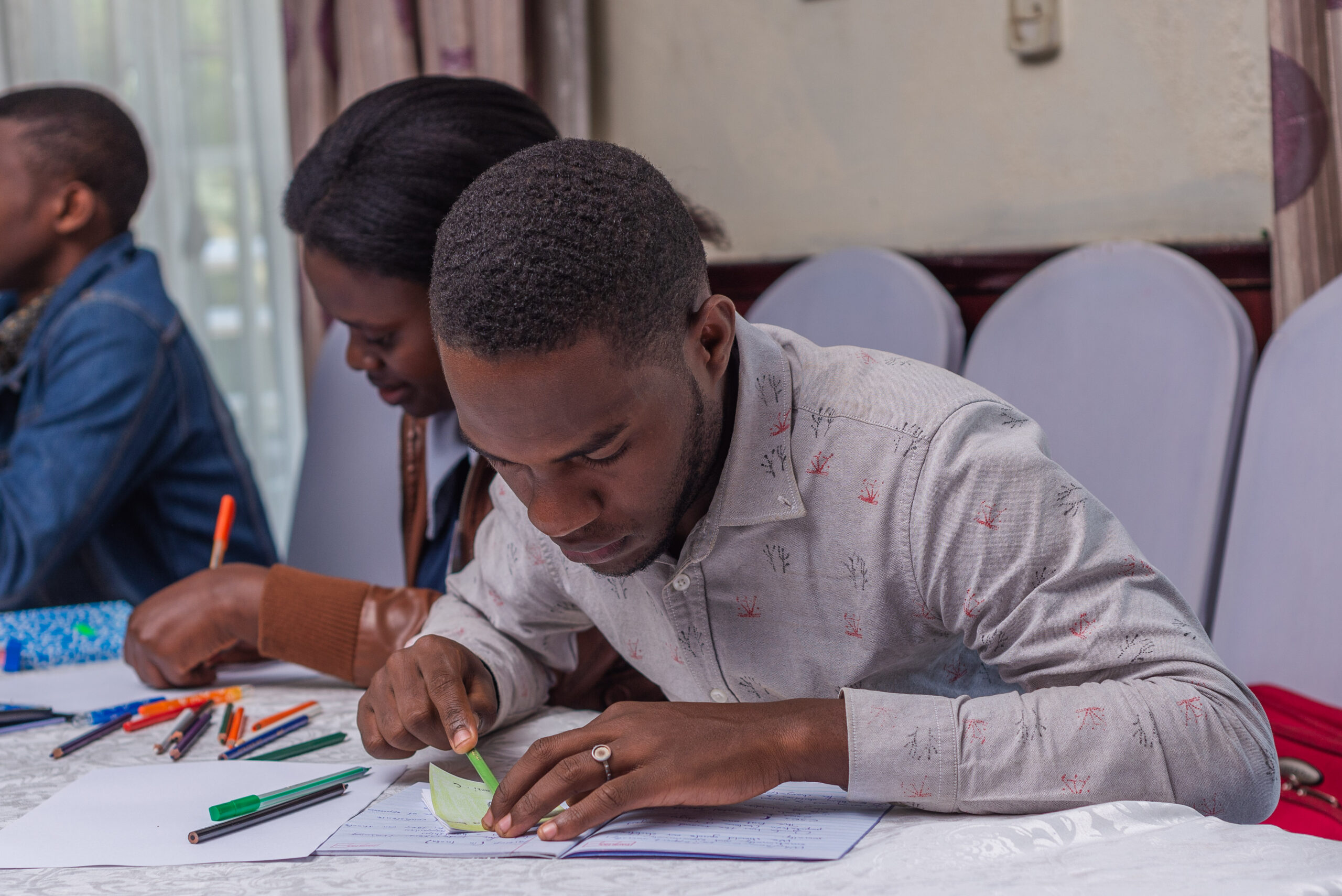
Together, we will explore practical ways to integrate arts-based learning and psychosocial support into everyday classroom practice.
The training will help educators:
- Build creative facilitation skills
- Gain arts-based mental health and psychosocial support knowledge
- Learn trauma-informed classroom approaches
- Integrate arts education as a pathway to student engagement and wellbeing
We are deeply grateful to Someone Else’s Child, Inc. and Global Fund for Children for their generous support in making this program possible.
Art as a Tool for Social and Emotional Learning
The goal of this program is not to turn teachers into professional artists.
Instead, it equips them with creative tools that can help them:
- Support emotional expression in students
- Improve student participation and engagement
- Strengthen relationships between teachers and learners
- Foster resilience, curiosity, and confidence
When students feel seen, heard, and emotionally safe, learning becomes possible.
Arts-based education supports social-emotional learning, helping students develop essential life skills such as empathy, communication, creativity, and problem-solving.
Why Arts Education Is Critical in Today’s Schools
Teachers today are being asked to respond to challenges that go far beyond academics.
Students need classrooms where they can:
- Explore their emotions
- Build confidence
- Develop resilience
- Reconnect with curiosity
Creative learning helps make this possible.
It strengthens the relationship between teachers and students, encourages participation, and supports the kind of holistic development that allows children to succeed not only in school but also in life.
Reimagining the Classroom Through Creativity
If we want classrooms where students are engaged, confident, and ready to learn, we must create environments where they can express themselves and feel understood.
Arts education is not an extra activity.
It is a foundation for human-centred education.
As we prepare for this year’s Art for Educators training, we remain inspired by the teachers who continue to show up with dedication and openness to new approaches.
Because when teachers are empowered with creative tools, they do more than teach lessons.
They help shape resilient, expressive, and confident young people.
And that is the kind of education our world needs today.
Looking Ahead
On 14 March 2026, the Art for Educators Program will convene over 120 teachers and school leaders committed to creating safer, more creative, and emotionally supportive classrooms.
We look forward to sharing stories, reflections, and lessons from the training.
Because when educators are equipped to nurture both the mind and the emotional wellbeing of learners, classrooms become places where children can truly heal, learn, and thrive.
To learn more about this initiative, reach out to us at [email protected] and [email protected]